




Brand Story
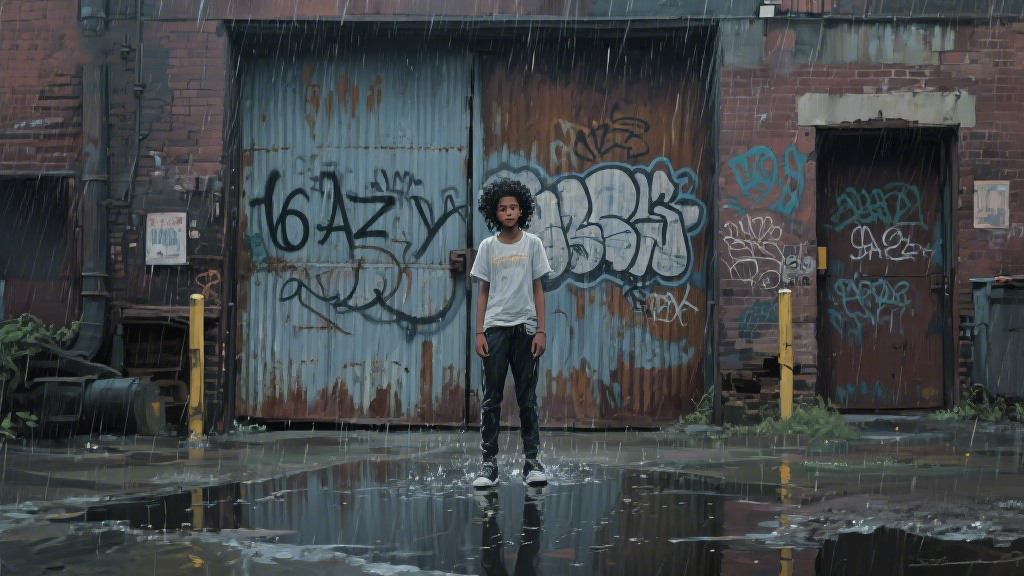
On summer nights in Brooklyn, the air is always filled with the mixed scent of graffiti spray paint and hot dog stands. Sixteen-year-old Jazzy crouches before the rusted metal door of an abandoned factory, watching as the rain washes away the unfinished graffiti on the wall, leaving behind a mottled pattern—it was then that she first realized that the romance of the streets is never flawless, but rather a imperfect yet authentic reality.
I. Youth Sewn Together with Needle and Thread
Jazzy spent her childhood in her grandmother's tailor shop. Her grandmother, a descendant of Caribbean immigrants, would often say while sewing, “Good clothes should be like skin—they must protect your vulnerabilities while allowing your soul to breathe.” At 12, she sewed the holes in her skateboard pants into thorn shapes, earning her the nickname “street art with needles and thread” from the neighborhood graffiti crew.
In high school, Jazzy set up a small stall at a flea market. One day, a sudden downpour soaked a customer's faded denim jacket, causing the dye to bleed along the fabric's texture, creating unexpected layers. “This is cooler than a new piece,” the customer remarked, suddenly enlightening her—the essence of street culture lies in the marks left by time and individuality.
2. Three failed “matching experiments”
In the winter of 2018, Jazzy launched the “EXACTMTCH Project” in a Brooklyn subway tunnel. She collected strangers' old clothes, re-cutting and piecing them together: sewing a punk band's torn T-shirt onto a priest's old suit, using graffiti artist's work pants fabric as the lining for a baseball jacket.
When she first tried to sell the garments to a skate shop, the owner frowned at the uneven stitching: “It's too rough.” Jazzy didn't explain that the imperfections were intentional—like the natural cracks in street walls, they didn't need to be polished.
On the second attempt, she improved the craftsmanship, but received an anonymous negative review: “It looks like a knockoff of a fast-fashion brand.” That night, she sat all night in front of a graffiti wall in Queens, watching as the early morning cleaning truck erased half of the mural, and suddenly realized: people don't want replicas of trends; they want containers that can hold their own stories.
It wasn't until the third year that she sewed her grandmother's lamb's wool collar onto a graffiti-printed jacket. When a street photographer bought it, he said, “This jacket seems to say, ‘I've experienced warmth and dare to face the sharp edges.’” That day, Jazzy wrote in her notebook: “EXACTMTCH—not an exact copy, but a precise alignment of souls.”
3. Give each patch a name
The brand truly took off because of the “subway jacket.” During the 2021 subway shutdown, Jazzy collected fabric scraps from 37 strangers—including a nurse's mask elastic, a rapper's dreadlock string, and a homeless person's woolen sock—and pieced them together into a denim jacket, embroidering “WE ARE ALL PIECES” on the back in gold thread.
The jacket was shared 30,000 times on Instagram. A girl named Mia commented, “Seeing the floral fabric on that jacket reminded me of the apron my grandmother sewed for me before she passed away.” This inspired Jazzy to print the story behind each fabric on the label of every garment: your clothes are not just fashion statements, but slices of life from countless strangers.
Today, EXACTMTCH's studio remains in the old factory in Brooklyn, with walls covered in customer photos: a priest in a graffiti jacket distributing food to homeless people on the street, a single mother in a fur coat taking photos of her son at a skatepark, a programmer in a functional jacket handing out pamphlets at a protest.
Jazzy often says, “We never sell clothes.” Just as her grandmother taught her, good design is like an old neighbor—it remembers all your struggles and moments of brilliance, yet never urges you to become someone else.